
AMSOIL Marine Grease GWR: Protect Your Bearings from Corrosion
Backing a trailer into salt water means exposing the bearings to metal's number-one enemy. Here's how synthetic water-resistant grease (GWR) protects your marine equipment season after season.
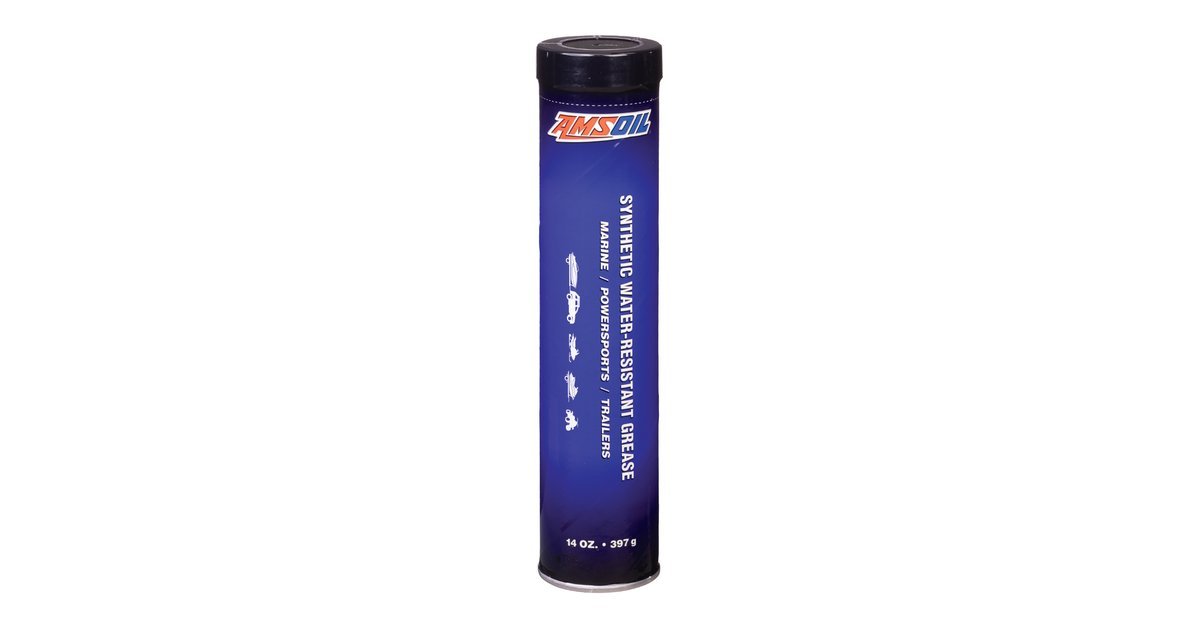
Every boat owner knows the scene: backing the trailer into the water for the spring launch. The bearings, still warm from the road, plunge into cold water. Pressure drops, water seeps past the seals — and if the grease inside isn't the right one, that's the beginning of a corrosion cycle that will destroy the bearings in a few seasons.
1. Why salt water is so destructive
Salt water combines several chemical and mechanical attacks:
- Thermal shock — vacuum created by cooling sucks water into the hub
- Electrolytic action — salt accelerates corrosion through galvanic effects
- Wash-out — ordinary mineral grease dilutes quickly when exposed to water
- Abrasion — sand particles and microbubbles wear down bearing balls
A dedicated marine grease must therefore combine wash-out resistance, anti-corrosion protection and adhesion in wet environments.
2. What GWR does differently
AMSOIL Synthetic Water-Resistant Grease (GWR) uses a calcium sulfonate complex thickener — the reference for marine lubrication. This thickener type has three key properties:
- Superior metal adhesion — even submerged, the grease doesn't peel off surfaces
- Natural hydrophobicity — repels water instead of absorbing it
- Intrinsic anti-corrosion protection — the thickener itself neutralizes chemical attacks
Concretely, after a launch, the grease stays in place and keeps protecting balls from rust — where an ordinary lithium grease would have washed out.
3. Main marine applications
- Boat trailer wheel bearings — the headline application
- Outboard bearings — lower units, props, gearcases
- Steering tilt-tube joints — marine steering
- Trailer slides and pins — points exposed to salt water splash
- Manual and electric winches — dockside equipment often exposed
- Boat hinges and pivot points — engine covers, hatches
All these applications share one thing: regular water exposure (fresh or salt). That's GWR's natural turf.
4. The right protocol for trailer bearings
For boat trailer bearings, maintenance isn't just about picking the grease. Here's the recommended routine:
- Before the season — disassemble the hub, clean mechanically, fully regrease with GWR
- Install a Bearing Buddy or equivalent — maintains slight positive pressure that keeps water out
- Before each launch — visually check the hub, pump a bit of grease through the Zerk
- After each salt water launch — rinse the hub with fresh water and inspect
- End of season — check the appearance of purged grease. If creamy or dark, disassemble and regrease
To go further on maintenance techniques, our article on the 4 greasing mistakes to avoid details the common pitfalls.
5. GWR vs other greases: when to pick what
To clarify the right choices:
- GWR — salt water, heavy fresh water use, submersion, marine equipment (the marine pick)
- GLC multi-purpose — rain, splash, occasional humidity (enough for many outdoor uses)
- GPOR off-road — mud, sand, shock (heavy equipment, non-submerged)
- GPTR truck/chassis — road exposure, road salt, vibration
If you're hesitating between two options for your specific situation, I can guide you — each piece of equipment has its own constraints.
Summary: your marine strategy
- For any bearing exposed to submersion: calcium sulfonate grease (GWR)
- Disassemble, clean and regrease before the season
- Install a Bearing Buddy to maintain positive pressure
- Rinse with fresh water and inspect after each salt water outing
- DO NOT substitute with multi-purpose grease: what works in the rain doesn't hold underwater
A poorly protected trailer bearing can seize mid-highway, cause an accident, or simply leave your boat stranded at the top of the ramp. The cost of the right grease cartridge is laughable compared to a wheel overheating on the freeway. In my opinion, GWR is one of the best investments for any boat owner in Quebec.